
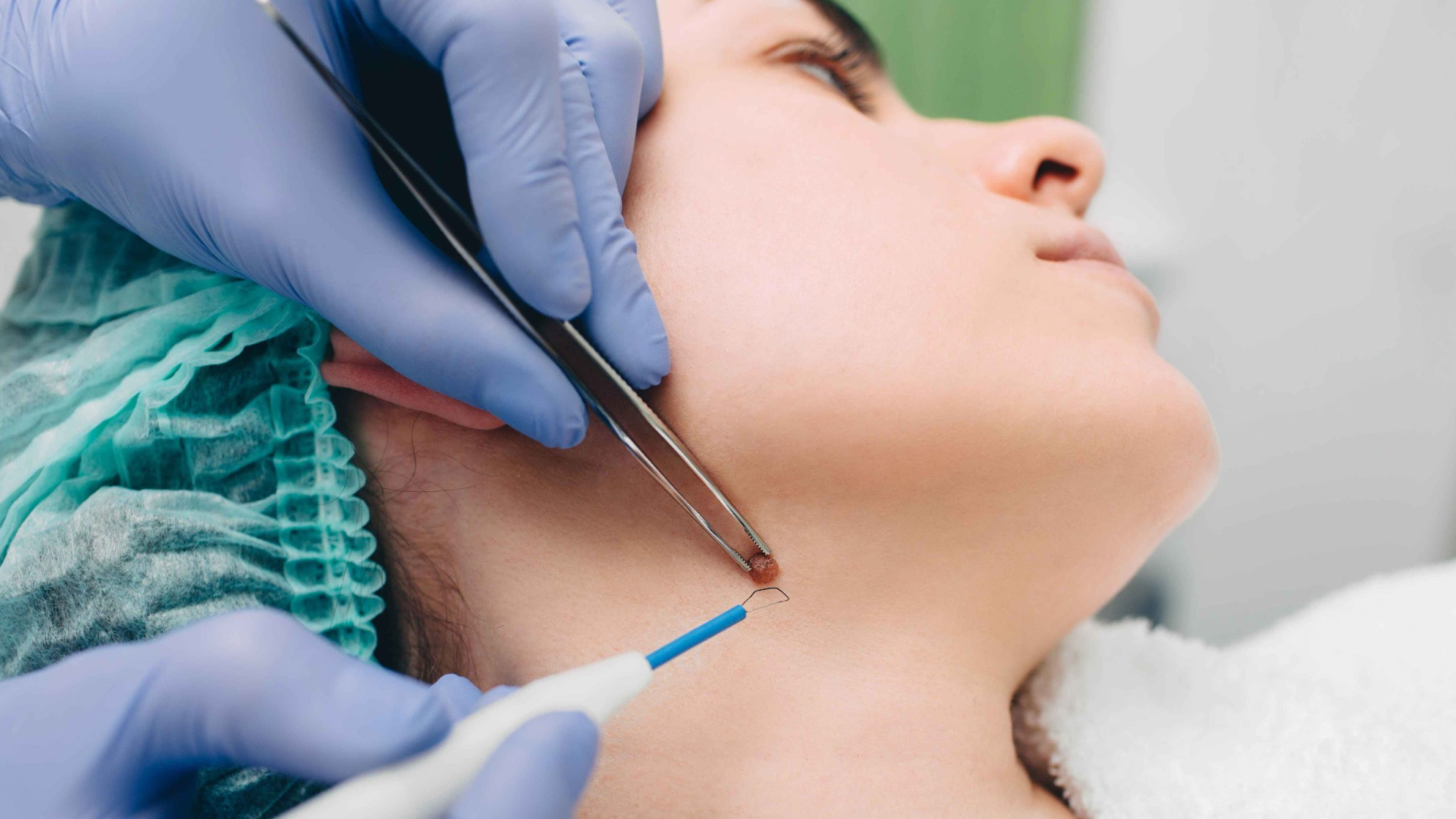
What Are Moles?
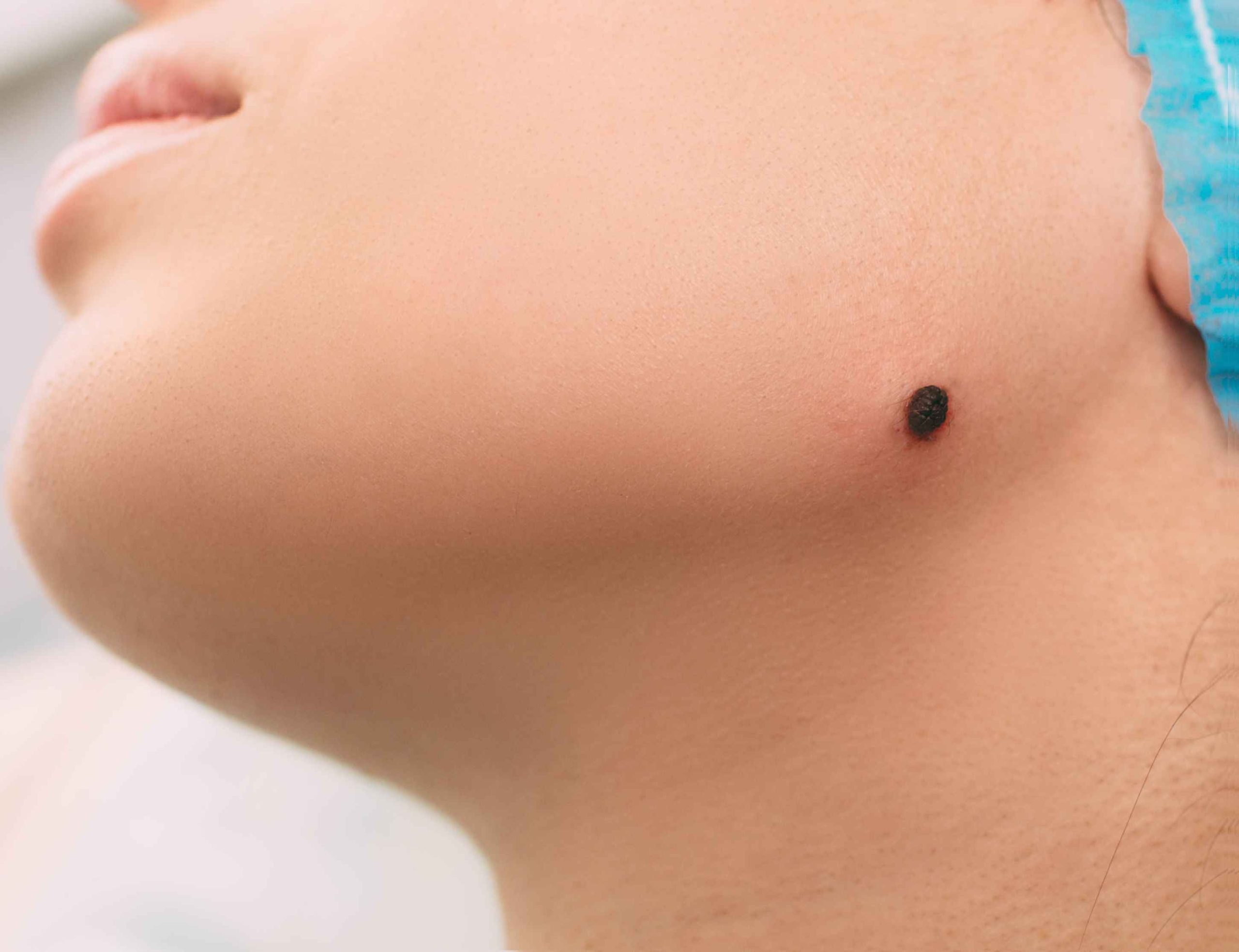
Moles (nevi) are clusters of pigmented cells showing up as tiny, dark patches on the skin. Although most moles are benign, some might have to be removed for cosmetic or medical purposes.
When to Consider Mole Removal
Medical Reasons
- Asymmetrical form. One half isn’t like the other.
- uneven border and Edges seem jagged or hazy.
- Color variances – Many tones inside one mole
- Expansion in diameter Greater than a pencil eraser’s 6mm mark.
- Evolution: Variations in color, form, or scale
Cosmetic Reasons
- Moles in obvious places are making oneself conscious.
- Moles grabbing on jewellery or clothes
- Affecting appearance, facial moles
Mole Removal Methods
Surgical Excision
The total elimination of a mole, together with a little margin of surrounding skin. With this approach:
- offers a whole tissue sample suitable for cancer screening.
- For worrisome or maybe malignant moles, it is perfect.
- calls for stitches and could leave a faint scar.
- Heals completely in two to three weeks.
Shave Excision
A surgical blade is used to shave the mole either at or slightly below skin level. By this approach:
- Best for elevated, non-suspicious moles
- Not a call for stitches.
- has a 1-2 week faster healing time.
- Maybe leave a little, level of scar.
Costs of Mole Removal
Medical Removal
- Usually covered by insurance, depending on medical need.
- Generally calls for a referral to a dermatologist.
- May call for deductibles or co-pays based on the insurance plan.
Cosmetic Removal
- Usually not insured by any policy
- Depending on size and location, costs run from PKR 5,000–25,000 per mole.
- It might call for a consultation fee apart from the operation expense.
Risks and Complications
Potential Risks
- Scarring: Location and skin type affect appearance.
- Infection (albeit rare in appropriate follow-up)
- Incomplete removal (mole can grow again).
- Nerve injury (rare; may produce tingling or numbness)
Recovery and Aftercare
Proper Wound Care
- Maintaining the area clean and covered for 24 to 48 hours
- Apply the advised ointment to stop the infection.
- Steer clear of the sun in the area under treatment.
- Look for indications of an infection (redness, warmth, pain).
Healing Timeline
- Initial healing falls between seven and fourteen days.
- Whole scar maturation: Up to twelve months
Recommended Skincare Products After Mole Removal
Essential Post-Procedure Skincare
- Gentle Cleanser Use pH-balanced, fragrance-free formulations to clean the region without aggravating discomfort
- Healing Serum: Search for components to help skin restoration, including peptides and niacinamide.
- Moisturizer with hypoallergens.Keep recovering skin hydrated with non-comedogenic, scent-free choices.
- Mineral Sunscreen (SPF 30+) helps to prevent hyperpigmentation by shielding the healing zone from sun exposure.
When to Resume Regular Skincare
At least two weeks before using regular skin care products, close to the treated area. Start with mild formulas and progressively introduce items. Steer clear of exfoliants, retinoids, and active components until fully healed.
When to Seek Professional Help
See a dermatologist right away if you observe:
- Typical mole variations
- Signs of an infection following removal
- Unexpected scars or issues with healing
- Regrowth of eliminated moles
Conclusion:
When carried out by medical experts, mole removal is a safe and efficient operation. Appropriate therapy depends on professional assessment, whether for cosmetic or health issues.
Looking for a dermatologist near me? Our professional dermatological care and mole removal in Lahore. Our experts offer thorough skin examinations and cutting-edge treatment choices.
FAQ’s:
Is eliminating moles unpleasant?
No, the operation is carried out under local anesthetic, hence there is less discomfort during removal. One to two days later, you can feel just a little uncomfortable.
Will removing a mole leave a scar?
Most mole removals leave a little scar that gradually disappears. Location, removal technique, and the healing characteristics of your skin will all affect visibility.
The operation lasts how long?
Usually including preparation and bandaging, typical mole removal takes 15 to 30 minutes per mole.
Are excised moles able to grow back?
Though rare, moles can sometimes resurface if cells linger under the skin following removal, especially using shaving excision techniques.
Should my mole be removed? How can I find out?
If worried, follow the ABCDE rule—asymmetry, border irregularity, colour changes, diameter growth, evolution—then see a dermatologist.
Add a Comment